

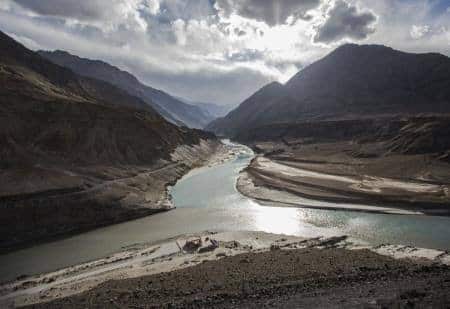
Indus Waters Treaty: The Historic Water Pact Between Pakistan & India
The treaty divides six major rivers between India and Pakistan.
Introduction
The Indus Waters Treaty (IWT), signed in 1960, is one of the world’s most enduring water-sharing agreements—even surviving three wars between India and Pakistan. But recent tensions have put this critical pact at risk, raising concerns about water security, agriculture, and regional stability.
What is the Indus Waters Treaty?
A Rare Success in Conflict Resolution
✔ Signed in: 1960 (Brokered by the World Bank)
✔ Key Rivers Covered:
Pakistan’s Share: Indus, Jhelum, Chenab (Western rivers)
India’s Share: Ravi, Beas, Sutlej (Eastern rivers)
✔ Unique Feature: Survived multiple wars and decades of hostility.
How It Works
India can use 20% of the western rivers’ water for limited irrigation and hydropower.
Pakistan gets 80% of the total Indus system flow—critical for its agriculture (90% of farmland relies on it).
Dispute Resolution: A Permanent Indus Commission meets annually to address concerns.
Why the Treaty is Now Under Threat
1. Recent Escalations
India paused cooperation after accusing Pakistan of supporting attacks in Jammu & Kashmir.
Pakistan warns that altering water flows could violate the treaty and trigger a crisis.
2. Climate Change & Water Scarcity
Melting glaciers and erratic monsoons are reducing river flows.
Pakistan is among the world’s most water-stressed countries—any cuts could devastate its food security.
3. India’s Hydropower Projects
Pakistan opposes some Indian dams on the Chenab & Jhelum, fearing reduced water flow.
India claims these projects comply with treaty terms.
What Happens if the Treaty Collapses?
⚠ Food Crisis in Pakistan – Less water = failed crops, higher prices, farmer unrest.
⚠ Diplomatic Fallout – Could escalate into a larger India-Pakistan conflict.
⚠ Global Concern – The World Bank & UN may need to intervene.
The Way Forward: Can the Treaty Survive?
🔹 Renewed Dialogue Needed – Both nations must return to negotiations.
🔹 Third-Party Mediation – The World Bank could help resolve disputes.
🔹 Climate Adaptation Plans – Joint management of dwindling water resources.
Conclusion: Water as a Bridge or a Weapon?
The Indus Waters Treaty has been a lifeline for millions—but politics and climate change now threaten it. If diplomacy fails, the consequences could ripple across agriculture, economies, and regional peace.
💧 “Water wars are preventable—but only if cooperation prevails over conflict.”