
Messi Statue Unveiled in Kolkata
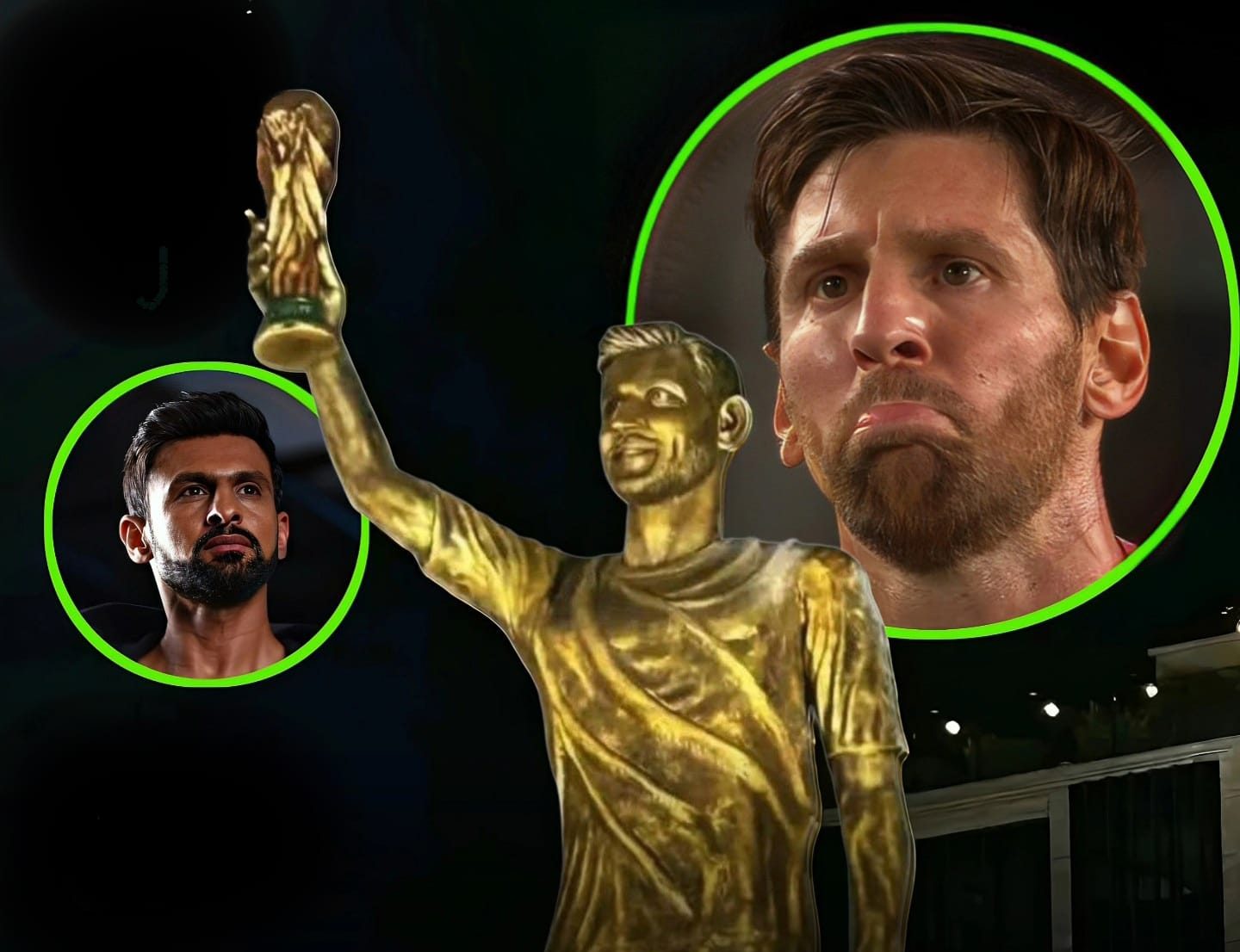
Messi Statue : India recently unveiled a 70-foot (21-meter) iron statue of Lionel Messi holding the World Cup trophy in Kolkata as part of his GOAT Tour India. The monumental statue is intended to celebrate Messi’s legendary football achievements and his influence in inspiring millions of fans across the world.
The unveiling ceremony attracted large crowds and media attention, highlighting Messi’s iconic status not only in football circles but also in popular culture throughout South Asia.
Public Reaction and Viral Discussions
Almost immediately after the unveiling, social media users began sharing images and videos of the statue, with many noting that the facial features appeared different from Messi’s actual likeness. Some netizens humorously claimed that the statue bore a closer resemblance to Pakistani cricketer Shoaib Malik rather than the Argentine football legend.
This unexpected comparison quickly went viral, generating memes, jokes, and heated discussions online. While some expressed disappointment about the artistic interpretation, others appreciated the humor and took the resemblance in stride, sharing the story widely across platforms like Twitter, Instagram, and X (formerly Twitter).
Read Also Here: Pakistan Egypt Trade Expands With 250-Business Whitelist
Messi Statue : Artistic Intent vs. Public Expectation
Large-scale statues often prioritize symbolism and presence over photorealistic accuracy. In the case of the Kolkata Messi statue, the artist appears to have focused on capturing Messi’s iconic pose holding the World Cup trophy, rather than replicating exact facial details.
Experts in public art note that sculpting accurate human likenesses at this scale is extremely challenging. Factors such as perspective, material limitations, and viewing distance can affect how closely a statue resembles its subject. Despite the controversy, the statue successfully conveys Messi’s achievement and his status as the GOAT (Greatest of All Time).
Historical Context of Monumental Sports Statues
Monumental statues of sports icons have a long tradition worldwide. They serve as tributes to athletes’ achievements, inspire young fans, and reinforce cultural significance. Famous examples include Cristiano Ronaldo’s statue in Madeira, Diego Maradona in Argentina, and Michael Jordan in Chicago.
In South Asia, such tributes are less common but gaining popularity, reflecting the region’s growing enthusiasm for international sports. The Kolkata Messi statue continues this trend, combining global football fandom with local cultural interest, and adds to India’s collection of large-scale monuments honoring notable figures.
Messi Statue : Technical Details of the Messi Statue
The statue stands 70 feet tall and is made of iron, designed to withstand weather conditions and the test of time. The sculpture captures Messi lifting the World Cup trophy—a moment that resonates with fans worldwide. Artists employed engineering techniques to ensure structural stability while maintaining aesthetic appeal at a massive scale.
While the facial details may not be perfect, the statue’s posture, proportions, and symbolic elements reflect Messi’s iconic triumph, aiming to evoke admiration and inspiration among viewers.
Media Coverage and Netizen Humor
The statue quickly became a trending topic in Indian and international media. Headlines highlighted both the unveiling and the surprising resemblance observations, demonstrating the power of social media to influence public perception of art.
Netizens created memes comparing the statue to Shoaib Malik, shared side-by-side photos, and generated playful commentary. This viral engagement, though humorous, amplified the statue’s visibility and brought global attention to the GOAT Tour India initiative.
Messi Statue : Cultural Significance
Despite the resemblance debate, the Messi statue reinforces the growing influence of international football in India. It serves as a symbol of aspiration for young players and sports enthusiasts, promoting a culture of sports admiration and fandom.
Additionally, the statue demonstrates India’s willingness to celebrate global icons while connecting them to local fan communities, merging international recognition with domestic cultural engagement.
Official Statements and Clarifications
Event organizers clarified that the statue was intended as a symbolic tribute rather than an exact replica. They emphasized the importance of celebrating Messi’s accomplishments, promoting football, and engaging fans in the region.
According to official sources, the GOAT Tour India aims to bring global sports icons closer to Indian audiences, offering immersive experiences and interactive fan events to foster a deeper connection between fans and their sporting heroes. Official GOAT Tour Website
Lessons from Public Art Controversies
The Messi statue controversy illustrates a common challenge in public art: balancing artistic interpretation with public expectation. Large-scale monuments are inherently interpretive, and the subjective nature of likeness often leads to varied reactions.
Art critics suggest that such debates, even humorous ones, are valuable as they generate public engagement and discussion. They also highlight the role of social media in shaping perceptions of art and its cultural significance.
Messi Statue : What This Means for Fans
For Messi fans in India and worldwide, the statue remains a landmark celebration of his achievements. While the resemblance debate may continue, the monument succeeds in creating a focal point for admiration, photography, and fan gatherings.
The statue’s unveiling encourages fans to engage with football culture, inspires young athletes, and strengthens Messi’s global legacy as the GOAT.
Frequently Asked Questions (FAQs)
Where is the Messi statue located?
The statue is located in Kolkata, India, as part of the GOAT Tour India.
How tall is the Messi statue?
It stands 70 feet (21 meters) tall.
What material is the statue made of?
The statue is made of durable iron, designed to withstand environmental conditions.
Why do netizens say it resembles Shoaib Malik?
Some social media users noted that the facial features of the statue differ from Messi and humorously resemble Pakistani cricketer Shoaib Malik.
What is the purpose of the statue?
It celebrates Messi’s World Cup victory, honors his career achievements, and promotes football fandom in India.
Read More Here: