
China Astronaut Training for Pakistan’s First Space Mission
Pakistan is on the brink of making history as it prepares to send its first astronauts into space. Under a landmark collaboration with the China Manned Space Agency (CMSA), two Pakistanis will undergo China astronaut training in 2025, followed by a planned journey to the Tiangong Space Station in October 2026.
This mission represents Pakistan’s first-ever human spaceflight, signaling not only scientific progress but also a new chapter in Pakistan-China strategic cooperation.
Selection of Pakistan’s First Astronauts
The Pakistan Astronaut Programme began in April 2025, and this month two individuals will be chosen to begin their year-long training in China. Training will be conducted at the Astronaut Centre of China, where they will prepare for life in microgravity, learn advanced spacecraft operations, and train in survival techniques.
One of the selected astronauts will serve as a scientific payload specialist, tasked with carrying out experiments during their time in orbit.
Read Also Here:
Cyclone Shakti Karachi Alert 360 KM Away from Coast
Role of Suparco and Scientific Research
Pakistan’s Space and Upper Atmosphere Research Commission (Suparco) is actively involved in shaping the mission. The commission invited proposals from researchers nationwide, receiving hundreds of submissions. Out of these, 300 experiments have been shortlisted for possible inclusion on the space mission.
These experiments will cover a wide range of fields, including:
- Aerospace engineering
- Biomedical sciences
- Material physics
- Microgravity research
- Ecology and environmental studies
- Astronomy
The Training Process in China
During their one-year China astronaut training program, the selected Pakistanis will undergo:
- Microgravity training – learning how to operate in weightless environments.
- Spacecraft operations – mastering docking, navigation, and emergency protocols.
- Scientific experimentation – conducting simulations of research that will later be carried out aboard Tiangong.
- Physical and mental resilience training – preparing for the psychological and physical challenges of spaceflight.
This collaboration provides Pakistan with direct exposure to China’s spaceflight expertise and advanced infrastructure.
Mission at Tiangong Space Station
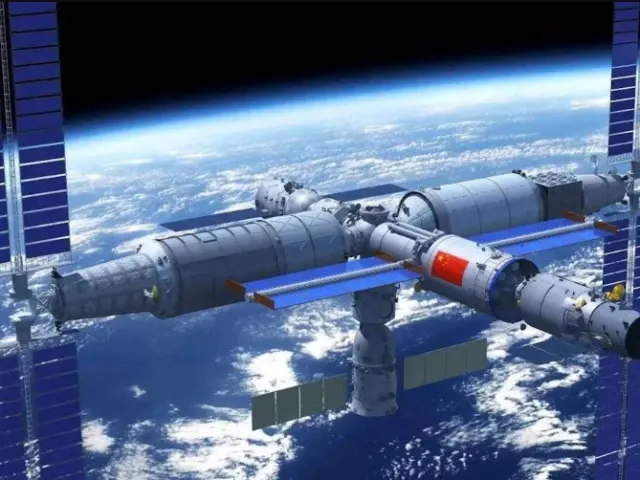
In October 2026, Pakistan’s first astronauts are expected to spend one week aboard China’s Tiangong Space Station. The astronauts will perform scientific research, test new materials, and contribute to international studies on space medicine and biology.
The Tiangong Station, equipped with modern labs and external adaptors, allows for:
- Long-term biomedical studies
- Earth observation and environmental monitoring
- Experiments in physics and fluid dynamics
- Testing technologies for future lunar missions
Broader Pakistan-China Space Cooperation
This mission is part of a long-term roadmap for space collaboration between the two nations. Key highlights include:
- The 2025–2029 Action Plan between Pakistan and China, which focuses on astronaut training, establishing a Pakistan Space Centre, and building capacity for future missions.
- The 2021–2030 Space Cooperation Outline, which paves the way for joint lunar exploration and Pakistan’s participation in the International Lunar Research Station project.
Through these initiatives, Pakistan is positioning itself as a serious partner in global space exploration.
Benefits for Pakistan
The upcoming astronaut mission offers several benefits for Pakistan:
- Scientific advancement: Data collected will contribute to medicine, technology, and environmental research.
- Technological progress: Hands-on experience in human spaceflight and spacecraft systems will build local expertise.
- Education and inspiration: The mission will inspire young Pakistanis to pursue careers in science, engineering, and aerospace.
- Strategic partnership: Strengthens Pakistan’s long-standing cooperation with China and enhances its global standing.
Challenges Ahead
While the development is historic, challenges remain:
- Ensuring astronaut safety in spaceflight.
- Building sustainable local infrastructure for space research.
- Encouraging continuous investment in Pakistan’s space program beyond this single mission.
However, with the backing of China and the momentum created by Suparco’s initiatives, Pakistan is set on a promising path.
Conclusion: A Giant Leap for Pakistan
The China astronaut training of Pakistani astronauts marks the beginning of a new era. By October 2026, Pakistan will join the small group of nations that have sent humans into space.
This milestone goes beyond symbolism—it represents a fusion of science, technology, and international cooperation. As Pakistan takes its first step into human spaceflight, it not only strengthens ties with China but also inspires its future generations to dream bigger and reach higher.
Read More Here: