
New Zealand Cricket’s Stunning Run to T20 World Cup Final 2026
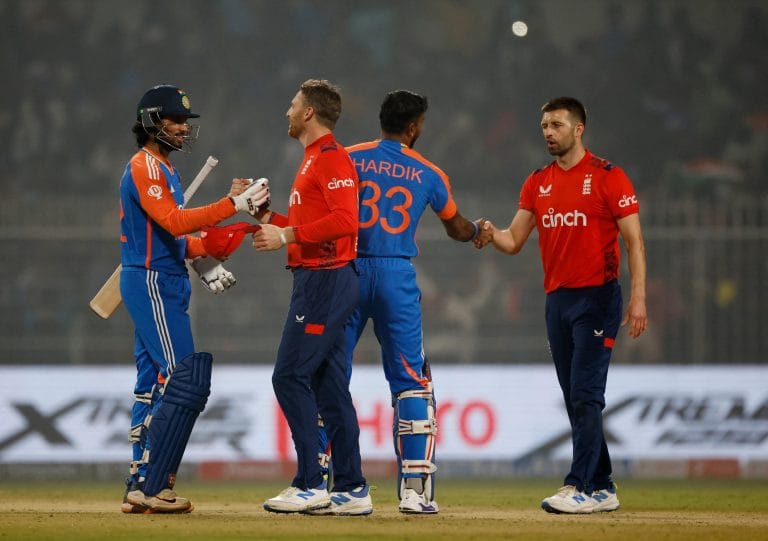
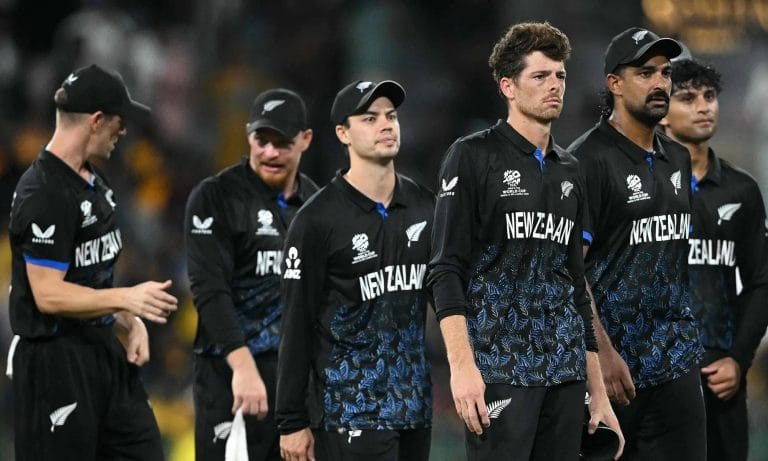
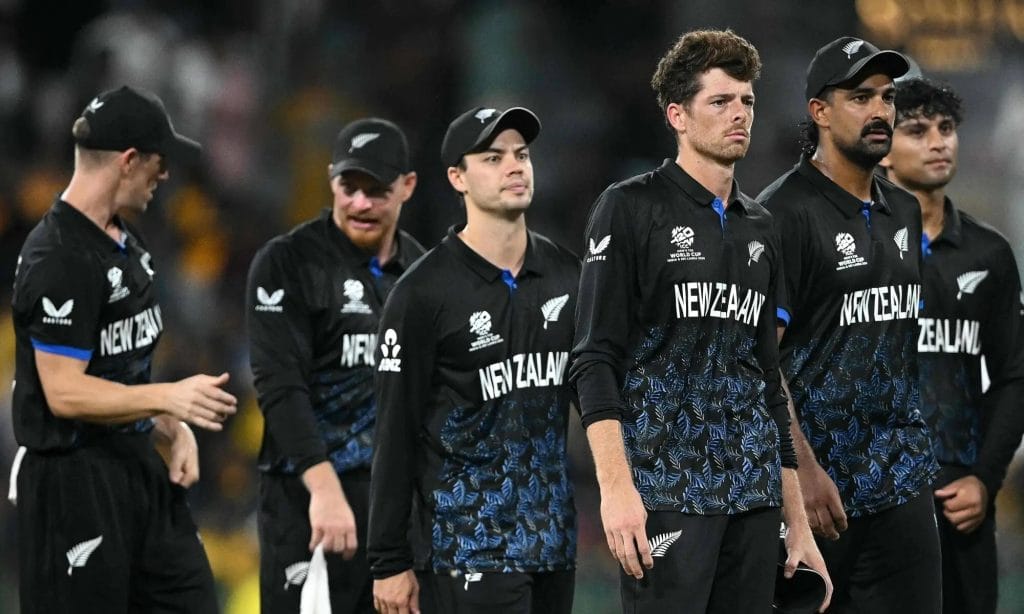
New Zealand cricket has once again demonstrated its knack for peaking at the right moment in global tournaments. The Black Caps, led by captain Mitchell Santner, have stormed into the final of the ICC Men’s T20 World Cup 2026 after a breathtaking nine-wicket demolition of South Africa in the semi-final at Eden Gardens, Kolkata . They will now face either India or England in the title clash at Ahmedabad’s Narendra Modi Stadium on Sunday, chasing their first-ever T20 World Cup crown .
Squad Building: A Spin-Heavy Strategy for Indian Conditions
New Zealand’s campaign was built on a carefully constructed squad announced in January 2026, with conditions in India firmly shaping their selection strategy . Mitchell Santner was named captain, leading a side that blended seasoned campaigners with in-form performers as they looked to bounce back after an early exit in the previous edition .
Read Also Here: Pakistan Announced ODI Squad for Bangladesh Series
New Zealand Cricket : The Squad
Player Role Notes
- Mitchell Santner (c) Spin All-rounder Leads spin attack, ninth senior ICC event
- Finn Allen Batter Explosive opener, returned from injury
- Michael Bracewell Spin All-rounder Later replaced due to injury
- Mark Chapman Batter Returned from ankle injury
- Devon Conway Batter Senior batter, declined central contract
- Jacob Duffy Fast Bowler Maiden T20 World Cup, 81 wickets in 2025
- Lockie Ferguson Fast Bowler Raw pace, paternity leave during tournament
- Matt Henry Fast Bowler Key pacer, paternity leave during tournament
- Daryl Mitchell Batter Senior performer
- Adam Milne Fast Bowler Pace option
- James Neesham All-rounder Pace-bowling all-rounder
- Glenn Phillips Spin All-rounder Part-time spin option
- Rachin Ravindra Spin All-rounder Breakout tournament performer
- Tim Seifert Wicketkeeper Batter Primary wicketkeeper
- Ish Sodhi Spinner Specialist spinner
- Kyle Jamieson Bowler Travelling reserve
The squad reflected a clear focus on balance and adaptability, with spin set to play a central role. With three league matches scheduled at Chennai’s Chepauk stadium, a venue known for aiding spin, the Kiwis stacked their squad with proven slow-bowling options . The attack was headlined by the experienced duo of Santner and Ish Sodhi, who between them boast an impressive 287 T20I wickets, bringing both control and wicket-taking ability in the middle overs .
The spin department was further strengthened by all-rounders Rachin Ravindra, Glenn Phillips, and Michael Bracewell, all capable of providing impactful overs .
Key Squad Developments
Jacob Duffy’s Rise
Jacob Duffy earned his maiden T20 World Cup appearance after a sensational 2025 in which he captured 81 international wickets, breaking Richard Hadlee’s 40-year-old record of 79 wickets in a year . He rose to second place on world T20 bowling rankings and was expected to lead the pace attack in his first global event .
Key Returns from Injury
The squad marked the return of several key players from injury :
- Finn Allen returned after managing finger and hamstring concerns. Since 2024, Allen has scored over 500 T20I runs at a staggering strike rate of 189.4 .
- Mark Chapman came back from an ankle injury after a strong showing against the West Indies where he struck at a rate above 200 .
- Captain Mitchell Santner returned from an adductor injury, strengthening New Zealand’s spin-heavy blueprint both with the ball and as a leader .
- Lockie Ferguson and Matt Henry recovered from calf injuries sustained during the ILT20 and Test series against the West Indies respectively .
Injury Replacement
New Zealand were forced to make a change to their squad during the tournament. The Event Technical Committee approved Cole McConchie as a travelling reserve after all-rounder Michael Bracewell picked up an injury while carrying out support duties during the match against Afghanistan in Chennai on February 8 . Coach Rob Walter called it “a massive blow,” adding that Bracewell “worked incredibly hard to give himself a chance but unfortunately has had this set back” .
Tournament Journey: From Net Run Rate to Record-Breakers
New Zealand’s path to the final was not straightforward. They scraped into the semi-finals on net run rate after a mixed Super Eight campaign that included losses to England and South Africa .
However, when it mattered most, the Black Caps delivered a performance for the ages.
Semi-Final: South Africa vs New Zealand
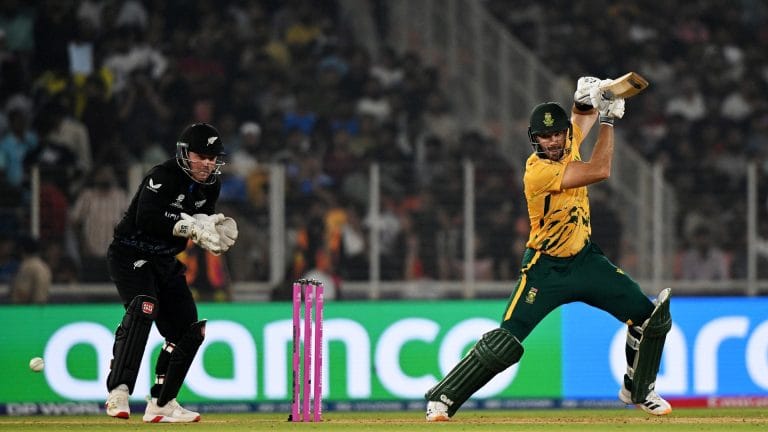
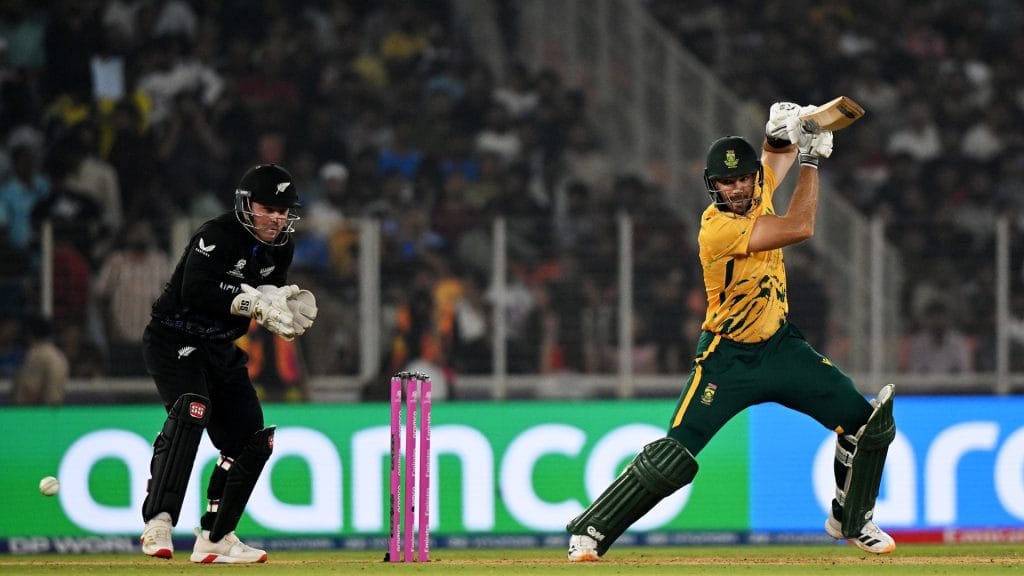
In the first semi-final at Eden Gardens on March 4, New Zealand produced a stunning display to crush the tournament’s only unbeaten side, South Africa, by nine wickets .
Match Summary :
- South Africa: 169/8 in 20 overs (Marco Jansen 55 not out, Tristan Stubbs 29; Rachin Ravindra 2/19, Cole McConchie 2/20, Matt Henry 2/34)
- New Zealand: 170/1 in 12.5 overs (Finn Allen 100 not out off 33 balls, Tim Seifert 58)
- Result: New Zealand won by 9 wickets
Key Moments:
Finn Allen’s Record-Breaking Century: Allen produced one of the most destructive knocks in World Cup history, blasting an unbeaten 100 off just 33 balls . He shattered Chris Gayle’s previous record for the fastest T20 World Cup century (47 balls) in a breathtaking display of power hitting that included eight sixes and ten fours . Chasing 170, New Zealand romped home with 7.1 overs to spare.
Seifert’s Blistering Support: Tim Seifert provided the perfect partner, hammering 58 off 33 balls in a rapid 117-run opening stand that blew the game open inside 10 overs . After the match, Allen praised his opening partner: “He just kept dealing in boundaries… he’s been doing that all tournament. He’s in incredible form. It’s good fun batting with Timmy when he’s in that mood” .
Spin Dominates with the Ball: Earlier, spinners Rachin Ravindra and Cole McConchie grabbed two wickets each to restrict South Africa to 169/8 after captain Mitchell Santner elected to field . Despite a fighting unbeaten 55 from Marco Jansen, the Proteas collapsed to 77/5 before recovering late.
Matt Henry’s Remarkable Week
Fast bowler Matt Henry had an emotional and busy week leading into the semi-final. He had travelled back home after New Zealand’s match against England on February 27 to be present for the birth of his son . Soon after, he returned to India and joined the team in Kolkata just a few hours before the semi-final .
Despite the long journey and little rest, Henry played an important role, taking 2 wickets for 34 runs, including two wickets in the final over . He said he relied on experience rather than practice before the semi-final because there was little time to prepare: “We’ve had lots of cricket so I think at this point it’s trust. Obviously if there’s rain you can’t train either so just going for that approach where making sure they’re mentally fresh, mentally ready and just being confident in your skills that you possess” .
The Final: A Shot at History
New Zealand will now play the final in Ahmedabad on Sunday, March 8, facing the winner of the second semi-final between India and England . They will be chasing their first-ever T20 World Cup crown, having been runners-up in 2021 .
Allen urged fans back home to rally behind the team: “Finals are special… you don’t get too many chances at them. Hopefully everyone gets behind us for Sunday” .
Analysis by Best Pak Mag
New Zealand cricket has once again demonstrated its unique ability to transform from understated qualifiers to unstoppable force when it matters most. The Black Caps’ journey to the T20 World Cup 2026 final encapsulates everything that makes this team special: meticulous planning, strategic adaptation to conditions, and the capacity to produce individual brilliance on the biggest stage.
The squad selection in January reflected a clear-eyed assessment of what would be required in India. By stacking their lineup with spin options, they anticipated the turning tracks of Chennai and Kolkata. Mitchell Santner and Ish Sodhi, with nearly 300 T20I wickets between them, provided the control that allowed faster bowlers to attack . The inclusion of five all-rounders gave Santner tactical flexibility unmatched by any other team in the tournament .
Jacob Duffy’s remarkable rise—from injury cover to record-breaker to World Cup debutant—represents the strength of New Zealand’s domestic system. His 81 wickets in 2025, surpassing a 40-year-old record held by the legendary Richard Hadlee, signaled the emergence of a new pace spearhead .
The semi-final victory over South Africa was a microcosm of New Zealand’s tournament. Matt Henry’s journey from paternity leave in New Zealand to match-winning performer in Kolkata within 24 hours embodied the team’s commitment and resilience . Finn Allen’s record-breaking century was the explosive statement of a player who, despite injury concerns and competing in the Big Bash, reminded the world of his devastating potential .
The secret to their surge, as Allen revealed, was five games on black soil during the preparatory series in India . That attention to detail—understanding conditions, adapting technique, trusting preparation—is the hallmark of New Zealand cricket.
Standing now at the threshold of history, the Black Caps face either India on home soil or England, the defending champions. Both opponents present formidable challenges. But if this team has proven anything across decades of global tournaments, it is that they are never more dangerous than when the stakes are highest.
Finals have been cruel to New Zealand—2015, 2019, 2021. But as Santner’s men prepare for Ahmedabad, they carry with them not the weight of past heartbreaks, but the momentum of a record-breaking semi-final and the belief that this time, finally, might be their moment.
Read More Here: