

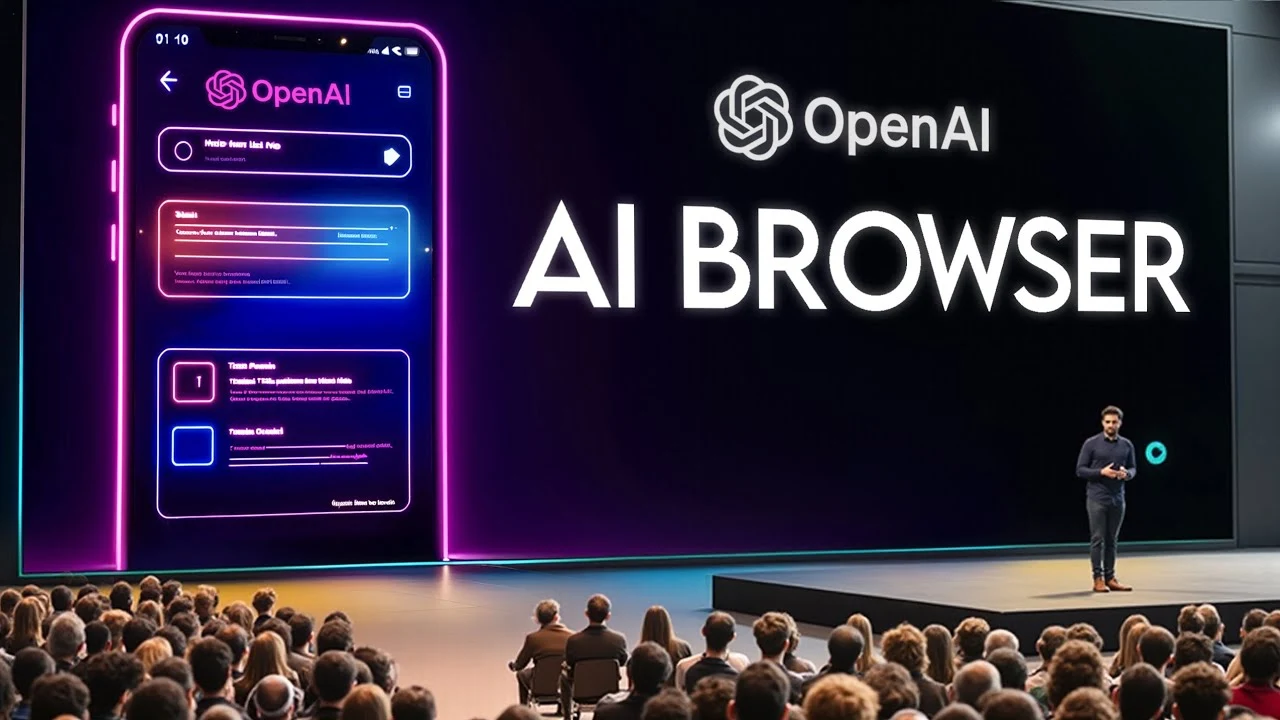
OpenAI AI Web Browser Set to Challenge Google Chrome
OpenAI is preparing to launch its own AI web browser, aiming to compete directly with Google Chrome, the world’s most popular browser. According to a report from Reuters, the browser is expected to be released in the coming weeks and could reshape how people interact with the internet.
This new OpenAI AI web browser will integrate powerful AI tools such as ChatGPT and Operator, giving users the ability to complete tasks, answer questions, and browse the internet in a smarter way — all from within a single platform.
How OpenAI’s AI Web Browser Works
The upcoming OpenAI AI web browser is expected to feature a ChatGPT-style interface. Instead of typing into a search engine and clicking links, users will be able to interact directly with the browser using natural language.
This means you could ask it to summarize an article, book a ticket, or write an email — all within your browser window. OpenAI’s AI tools will handle much of the work that currently requires multiple steps and tabs.
Built on Chromium, But With a Twist
The OpenAI AI web browser will be built on Chromium, the same open-source codebase used by Google Chrome, Microsoft Edge, and Opera. However, OpenAI plans to build its browser from the ground up, not just as a plug-in or extension. This will give OpenAI more control over how its browser works and how data is handled.
Unlike traditional browsers that often redirect users to websites and search engines, OpenAI’s version will try to keep users inside the AI-powered environment. This means fewer clicks, less time spent searching, and a more personalized experience.
Why OpenAI Is Launching an AI Browser
With more than 500 million people using ChatGPT every week, OpenAI already has a strong base of users familiar with its tools. The OpenAI AI web browser will build on this by making AI tools available in real time during everyday browsing.
There are also signs that OpenAI wants to challenge Google’s hold on the search and advertising market. By keeping users inside its own browser and AI ecosystem, OpenAI can reduce people’s need to visit search engines like Google. This would be a major shift in how people access online information.
Impact on Google Chrome and the Browser Market
Google Chrome currently controls over two-thirds of the global browser market, with more than 3 billion users. Apple’s Safari is a distant second. However, Google is also facing legal pressure over its dominance in search, including potential divestiture of Chrome.
OpenAI, meanwhile, has been hiring former Google engineers — including some who originally helped build Chrome — to work on its AI web browser. This adds more pressure on Google and shows that OpenAI is serious about entering the browser space.
Competition from Other AI Browsers
OpenAI isn’t alone in this race. Several startups are also developing AI web browsers that aim to simplify the browsing experience:
Perplexity AI (Comet) is creating a conversational browser.
The Browser Company offers Arc, focused on AI-driven workflows.
Brave now includes AI features like summarization and smart search.
Still, OpenAI’s large user base and deep integration of ChatGPT and Operator give it a major advantage.
What This Means for Everyday Users
If you use the internet for work, school, or personal tasks, the OpenAI AI web browser could significantly change how you browse. Instead of doing searches, opening multiple tabs, and copying/pasting information, you may be able to ask the browser to handle tasks for you.
This could save time, reduce distractions, and make the internet more accessible for users who prefer voice or text commands over traditional navigation.
Conclusion
The upcoming OpenAI AI web browser could mark a big shift in how people use the internet. By combining AI tools like ChatGPT and Operator into a browser built from scratch, OpenAI is aiming to simplify digital tasks and compete with tech giants like Google.
If successful, this browser could become a serious alternative to Chrome, especially for users who want a smarter and more personalized browsing experience.
Stay tuned — the AI-powered future of web browsing may be just around the corner.