
Punjab Launches First-Ever Clinic on Boats for Flood Victims
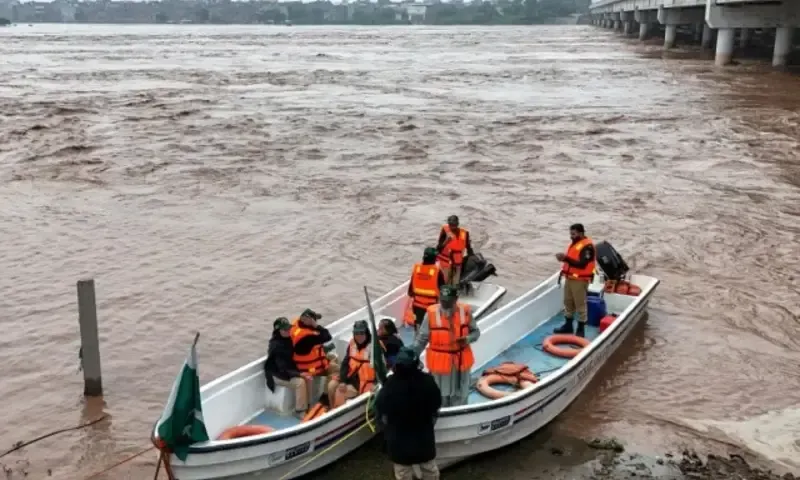
For the first time in Pakistan’s history, Punjab has launched an innovative Clinic on Boats project to provide healthcare to people living in flood-affected areas. This program is designed to deliver medical services directly to communities cut off by rising waters, ensuring that vulnerable families, especially women and children, receive timely treatment.
The initiative reflects a bold vision by Chief Minister Maryam Nawaz Sharif, who has prioritized public health and disaster preparedness as key components of her government’s agenda. With more than 960 mobile clinics and health camps already active in different districts, the launch of floating clinics adds a new dimension to Punjab’s healthcare response.
The Idea Behind Clinic on Boats
Flooding has become a recurring challenge in Pakistan, particularly in Punjab and Sindh, where monsoon rains regularly displace millions. Traditional relief efforts, while valuable, often struggle to reach people stranded in villages surrounded by floodwaters.
The concept of Clinic on Boats emerged as a solution to bridge this gap. By equipping boats with medical staff, medicines, diagnostic kits, and emergency equipment, the government can now sail healthcare to remote areas, saving lives that might otherwise be lost due to isolation.
This idea is not only innovative but also a first-of-its-kind healthcare model in Pakistan, showing how technology and governance can adapt to climate-driven crises.
Leadership and Implementation
The launch of this project was carried out on the direct orders of Chief Minister Maryam Nawaz Sharif, who emphasized that no citizen should be left behind during natural disasters. She highlighted the importance of innovation in governance, particularly in tackling climate change and health emergencies.
Under her leadership:
- 960 mobile clinics and health camps are already operational.
- Floating clinics are being deployed in flood-prone areas such as Dera Ghazi Khan, Rajanpur, Muzaffargarh, and Rahim Yar Khan.
- Special funds have been allocated for medical supplies, vaccines, and nutrition programs.
The project is being executed in collaboration with the Punjab Health Department, Rescue 1122, and NGOs working on disaster relief.
Healthcare Services Offered on the Boats
The floating clinics are designed to provide a wide range of health services, focusing on both immediate and long-term needs. These include:
1.Maternal and Child Health
- Prenatal and postnatal checkups for pregnant women
- Safe delivery kits for emergency childbirth
- Vaccinations for children under five
2.Disease Prevention and Treatment
- Treatment for waterborne diseases like diarrhea, cholera, and typhoid
- Distribution of mosquito nets to prevent malaria and dengue
- First aid and trauma care for injuries sustained during floods
3.Nutrition and Screening
- Screening for malnutrition in children
- Distribution of high-energy food supplements
- Nutrition counseling for mothers
4.Emergency Response
- Deployment of mobile ambulances for critical patients
- Onboard medical specialists including gynecologists and pediatricians
- Stocked relief camps with medicines, hygiene kits, and clean drinking water
Why Focus on Women and Children?
Disasters affect every section of society, but women and children face disproportionate risks. During floods, access to safe childbirth facilities, vaccinations, and nutrition often declines. This leads to rising maternal mortality, childhood diseases, and malnutrition.
By prioritizing maternal and child health, Punjab’s government is addressing the most urgent humanitarian need. Experts suggest that this focus could significantly reduce preventable deaths during disasters.
Comparing with Global Practices
Similar models of floating healthcare have been seen in other countries. For example:
- Bangladesh operates “floating hospitals” that provide free treatment to rural communities along its river networks.
- Vietnam and Indonesia use medical boats to serve island populations.
- Africa has launched boat clinics along the Nile and Lake Victoria for hard-to-reach areas.
Punjab’s Clinic on Boats initiative places Pakistan alongside these countries, showcasing how developing nations can innovate to serve their people in times of crisis.
Climate Change and the Need for Innovation
Pakistan is among the top 10 most climate-vulnerable countries in the world. In recent years, devastating floods have displaced millions, destroyed crops, and strained healthcare systems. Experts warn that such disasters will become more frequent due to climate change.
The Clinic on Boats project is not just a response to one disaster—it is part of a long-term adaptation strategy. By building mobile healthcare infrastructure, Punjab is preparing for future floods, ensuring resilience and readiness.
Public Response and Impact
The people of Punjab, especially those living in South Punjab’s flood-prone areas, have welcomed the initiative with relief and gratitude. Many families reported that this is the first time they have seen doctors arrive by boat to treat their children.
Local NGOs and community leaders have also praised the move, calling it a milestone in healthcare delivery. Early reports suggest that hundreds of patients have already benefited from free medical checkups, vaccinations, and medicine distribution.
Future Plans and Expansion
Punjab’s government plans to expand the Clinic on Boats program in the following ways:
- Increasing the number of floating clinics before the next monsoon season.
- Adding telemedicine facilities on boats to connect patients with specialists in Lahore.
- Partnering with international organizations for funding and technical expertise.
- Replicating the model in Sindh and Balochistan through federal cooperation.
This initiative has the potential to become a national model for flood-response healthcare.
Why This Matters for Pakistan
The Clinic on Boats project is more than a temporary relief measure. It demonstrates how Pakistan can:
- Adapt to climate challenges with creative solutions.
- Prioritize public health even in emergencies.
- Strengthen disaster resilience while setting an example for other provinces.
By blending governance, healthcare, and innovation, Punjab has created a system that could save thousands of lives every year.
Conclusion
The launch of Punjab’s Clinic on Boats marks a new era in Pakistan’s disaster management and healthcare system. By directly reaching families stranded in flood-hit regions, the government has shown a people-first approach to governance.
With Chief Minister Maryam Nawaz Sharif’s leadership, the province is not only providing urgent medical relief but also setting the stage for a resilient and climate-adaptive healthcare model.
This initiative is a milestone, proving that even in the face of climate disasters, innovative governance can bring hope, healing, and survival to those who need it most.
Read More Here: